The Science Behind Solar Eclipses
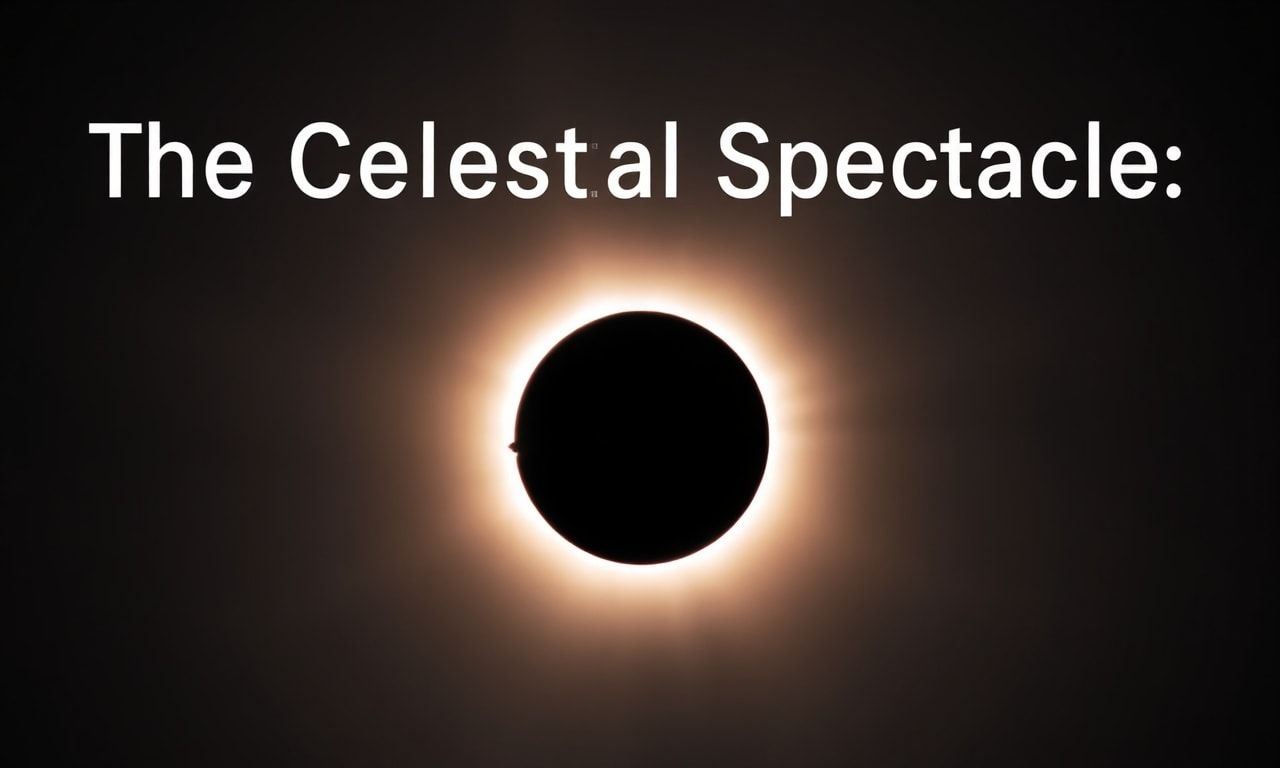
A solar eclipse occurs when the Moon passes between Earth and the Sun, thereby obscuring the Sun either partially or completely. This celestial event is a marvel of orbital mechanics, where the Moon’s shadow races across the Earth’s surface at speeds exceeding 1,000 miles per hour. There are three types of solar eclipses: total, partial, and annular. During a total solar eclipse, the Moon completely covers the Sun, revealing the Sun’s corona, a halo of plasma that is normally obscured by the Sun’s brightness. Partial eclipses occur when only a part of the Sun is obscured, while annular eclipses happen when the Moon is too far from Earth to completely cover the Sun, resulting in a ‘ring of fire’ effect.
Historical Significance and Cultural Impact
Throughout history, solar eclipses have captivated human imagination and have been the subject of numerous myths and legends. Ancient civilizations often interpreted eclipses as omens or signs from the gods. For instance, in Chinese culture, eclipses were seen as celestial dragons devouring the Sun. The ancient Greeks used solar eclipses to predict the fall of empires and the rise of new ones. In modern times, solar eclipses have become opportunities for scientific discovery and public engagement. The 1919 eclipse, for example, provided crucial evidence supporting Albert Einstein’s theory of general relativity.
Modern Scientific Research
Today, solar eclipses offer unique opportunities for scientific research. Astronomers use these events to study the Sun’s corona, solar flares, and other phenomena that are otherwise difficult to observe. Eclipses also provide insights into the Earth’s atmosphere and its interaction with solar radiation. The next total solar eclipse visible from the United States will occur on April 8, 2024, and scientists are eagerly preparing to gather data during this event. Researchers will use sophisticated instruments to study the Sun’s corona and the effects of the eclipse on Earth’s atmosphere and wildlife.
Preparing for the Next Solar Eclipse
For those planning to witness the upcoming solar eclipse, preparation is key. Safety is paramount when viewing a solar eclipse. Directly looking at the Sun, even during an eclipse, can cause permanent eye damage. Special eclipse glasses that meet the ISO 12312-2 international safety standard should be used to protect your eyes. Additionally, indirect viewing methods, such as pinhole projectors, can provide a safe way to observe the eclipse. Many communities along the path of totality are preparing for an influx of visitors, with local authorities and organizations offering educational programs and viewing events.
Eclipse Tourism and Economic Impact
Solar eclipses have become significant events for tourism, drawing thousands of visitors to the path of totality. The 2017 solar eclipse, which traversed the United States from coast to coast, brought in an estimated $360 million in economic impact. Hotels, restaurants, and local businesses benefited from the influx of tourists. The upcoming 2024 eclipse is expected to have a similar, if not greater, economic impact. Communities along the eclipse path are preparing by offering special events, tours, and educational programs to attract visitors and provide a memorable experience.
The Role of Technology in Eclipse Observation
Advancements in technology have revolutionized the way we observe and study solar eclipses. High-resolution cameras, telescopes, and satellites provide unprecedented views of the Sun and its corona. Live streaming and social media platforms allow people from around the world to witness the eclipse in real-time. Websites like popüler konular gündem tartışmaları often feature discussions and updates on upcoming celestial events, including solar eclipses. These platforms provide a wealth of information and resources for both amateur enthusiasts and professional astronomers.
Future Eclipse Predictions
Predicting the occurrence of solar eclipses is a precise science. Astronomers use complex algorithms and historical data to calculate the exact timing and path of future eclipses. The next total solar eclipse after 2024 will occur on August 12, 2026, and will be visible from the Arctic, Greenland, and parts of Spain. Future eclipses will continue to captivate scientists and the public alike, offering opportunities for discovery and education. As technology advances, our understanding of these celestial events will deepen, providing new insights into the workings of our solar system.