The Anticipation Builds
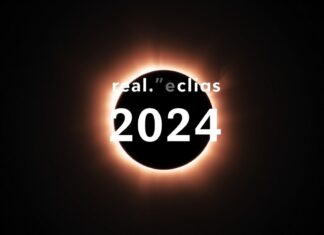
The scientific community and astronomy enthusiasts around the world are abuzz with excitement as they prepare for the solar eclipse of 2024. This celestial event, set to occur on April 8, promises to be a spectacle of nature’s grandeur, visible across a large swath of North America. The anticipation is palpable, with experts and amateurs alike gearing up for what is being touted as one of the most significant astronomical events of the decade.
Understanding Solar Eclipses
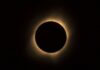
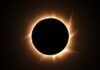
A solar eclipse occurs when the Moon passes between the Earth and the Sun, casting a shadow on the Earth’s surface. This alignment can only happen during a new moon when the Sun, Moon, and Earth are aligned in a straight or nearly straight line. There are three types of solar eclipses: total, partial, and annular. The upcoming eclipse is expected to be a total solar eclipse, where the Moon completely covers the Sun, revealing the Sun’s corona, a halo of plasma surrounding the star.
The Path of Totality
The path of totality, where the total eclipse will be visible, stretches from Mexico, through the central United States, and up into Canada. Cities like Dallas, Indianapolis, and Cleveland will experience the full effect, with the Moon completely obscuring the Sun for a few minutes. This path is crucial for scientists and eclipse chasers who want to witness the event in its full glory. For those outside this path, a partial eclipse will still be visible, offering a partial darkening of the Sun.
Scientific Significance
The solar eclipse of 2024 presents a unique opportunity for scientific research. Astronomers plan to study the Sun’s corona, which is usually hidden by the bright light of the Sun’s surface. The corona’s temperature is millions of degrees, much hotter than the Sun’s surface, and understanding its behavior can provide insights into solar activity and its impact on Earth. Additionally, the eclipse offers a chance to study the Sun’s magnetic field and its influence on space weather.
Researchers will also use the eclipse to study the Earth’s atmosphere. The sudden darkening during the eclipse can reveal changes in atmospheric conditions, such as temperature drops and wind patterns. This data is invaluable for meteorologists and climatologists working to understand the complex interactions within our planet’s atmosphere.
Public Engagement and Education
Educational institutions and science organizations are seizing the opportunity to engage the public in this celestial event. Schools and universities are planning special viewing events, complete with telescopes and expert guidance. Museums and planetariums are hosting workshops and lectures to educate the public about the science behind solar eclipses. This collective effort aims to inspire a new generation of scientists and astronomers, fostering a deeper appreciation for the wonders of the universe.
For those looking to maximize the impact of their eclipse-related outreach, a well-planned marketing strategy is essential. Whether you’re organizing a public viewing event or launching an educational campaign, having a clear marketing budget planning guide can help ensure your message reaches the right audience. By leveraging social media, local partnerships, and targeted advertising, you can create a memorable experience that educates and inspires.
Preparation and Safety
Witnessing a solar eclipse is a memorable experience, but it’s crucial to prioritize safety. Looking directly at the Sun, even during an eclipse, can cause permanent eye damage. Special eclipse glasses that meet the ISO 12312-2 international safety standard are necessary for safe viewing. These glasses filter out harmful ultraviolet and infrared radiation, allowing viewers to safely observe the eclipse.
For those planning to travel to the path of totality, early preparation is key. Accommodations and transportation can become scarce as the date approaches, so booking in advance is advisable. Additionally, checking local weather forecasts can help viewers choose the best location for clear skies on the day of the eclipse.
Historical Context
Solar eclipses have fascinated humans for centuries. Ancient civilizations often viewed eclipses as omens or signs from the gods. The ancient Greeks, for example, saw eclipses as a time of divine intervention. In more recent history, eclipses have provided opportunities for scientific discovery. The 1919 eclipse, for instance, provided evidence supporting Albert Einstein’s theory of general relativity.
The solar eclipse of 2024 is poised to add to this rich history. As technology and scientific understanding advance, each eclipse offers new opportunities for discovery and education. Whether you’re a seasoned astronomer or a curious observer, this event promises to be a memorable and enlightening experience.
Conclusion
The solar eclipse of 2024 is more than just a celestial event; it’s a chance to connect with the universe and deepen our understanding of the cosmos. From scientific research to public education, this eclipse offers something for everyone. By preparing safely and engaging with the community, we can all contribute to the legacy of this remarkable event. As the countdown to April 8 begins, the excitement continues to grow, reminding us of the awe-inspiring power of nature.