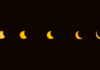
The Great North American Solar Eclipse of 2024: An Overview
The celestial event of the decade is upon us. On April 8, 2024, a total solar eclipse will traverse North America, captivating millions of spectators. This rare phenomenon, where the moon completely obscures the sun, will cast a shadow path from Mexico to Canada, with the United States in its direct line. The last time a total solar eclipse graced the continent was in 2017, and the next one won’t occur until 2045. This makes the 2024 solar eclipse a must-see event for astronomy enthusiasts and casual observers alike.
Understanding the Science Behind the Eclipse
A solar eclipse occurs when the moon passes between the Earth and the sun, blocking the sun’s light either partially or completely. During a total solar eclipse, the moon’s shadow, known as the umbra, touches the Earth’s surface, creating a path of totality. Outside this path, observers will experience a partial eclipse, where only a portion of the sun is obscured. The 2024 eclipse will have a totality duration of up to 4 minutes and 28 seconds, depending on the viewer’s location within the path.
The Path of Totality
The path of totality for the 2024 eclipse will begin in Mazatlán, Mexico, around 11:07 AM local time and will exit the continent in Newfoundland, Canada, at approximately 5:16 PM local time. Major cities within the path include Dallas, Texas; Indianapolis, Indiana; Cleveland, Ohio; and Montreal, Canada. Those outside the path but within the continental United States will still witness a partial eclipse, with the percentage of obscurity varying by location.
Preparing for the Eclipse: Safety and Viewing Tips
Watching a solar eclipse is a breathtaking experience, but it’s crucial to prioritize safety. Looking directly at the sun, even during an eclipse, can cause permanent eye damage. To view the eclipse safely, use certified solar eclipse glasses that meet the ISO 12312-2 international safety standard. Regular sunglasses are not sufficient for protecting your eyes from the sun’s harmful rays.
For those planning to travel to the path of totality, it’s essential to prepare in advance. Accommodations are likely to be booked solid, and traffic congestion is expected. It’s also a good idea to familiarize yourself with time management techniques practical for the day to ensure you don’t miss the event due to logistical issues. Additionally, consider bringing a camera with a solar filter to capture the moment safely.
Photographing the Eclipse
Capturing the solar eclipse on camera requires special equipment and precautions. A solar filter is a must to protect your camera’s sensor from the sun’s intense light. Additionally, a tripod will help stabilize your shots, especially during the brief moments of totality. If you’re using a smartphone, consider using a solar filter designed for mobile devices and a stable surface to rest your phone on.
The Cultural and Historical Significance of Solar Eclipses
Throughout history, solar eclipses have captivated and, at times, terrified humanity. Ancient civilizations often interpreted eclipses as omens or signs from the gods. For instance, the ancient Chinese believed that a celestial dragon was devouring the sun during an eclipse. To scare the dragon away, they would make loud noises and bang drums. In Norse mythology, the eclipse was seen as the wolf Sköll chasing and eventually catching the sun.
Today, solar eclipses hold a different significance. They are opportunities for scientific discovery and public engagement in astronomy. The 2024 eclipse, in particular, presents a unique chance for researchers to study the sun’s corona, a region of the solar atmosphere that is typically hard to observe due to the sun’s bright light.
Looking Ahead: Future Solar Eclipses
While the 2024 solar eclipse is a highly anticipated event, it’s not the last one we’ll witness. The next total solar eclipse visible from the contiguous United States will occur on August 23, 2044, with the path of totality crossing Montana, North Dakota, and South Dakota. Following that, on August 12, 2045, a total solar eclipse will be visible from the southern United States, with the path of totality stretching from California to Florida.
For those eager to experience the awe-inspiring phenomenon of a total solar eclipse, the 2024 event is a golden opportunity. Whether you’re a seasoned astronomy enthusiast or a first-time observer, witnessing the moon completely block out the sun is an unforgettable experience. So mark your calendars, prepare your safety gear, and get ready to witness the celestial spectacle of the decade.
In the spirit of community resilience, discover how Iowans are banding together in response to recent flooding.
Amidst the constant stream of current events, understanding the importance of relaxation can be crucial for maintaining mental well-being, as explored in the benefits of unwinding daily.
In the midst of today’s fast-paced news cycle, discovering ways to enhance your daily life can be a breath of fresh air, and simple changes for meaningful impacts offers practical advice to help you do just that.