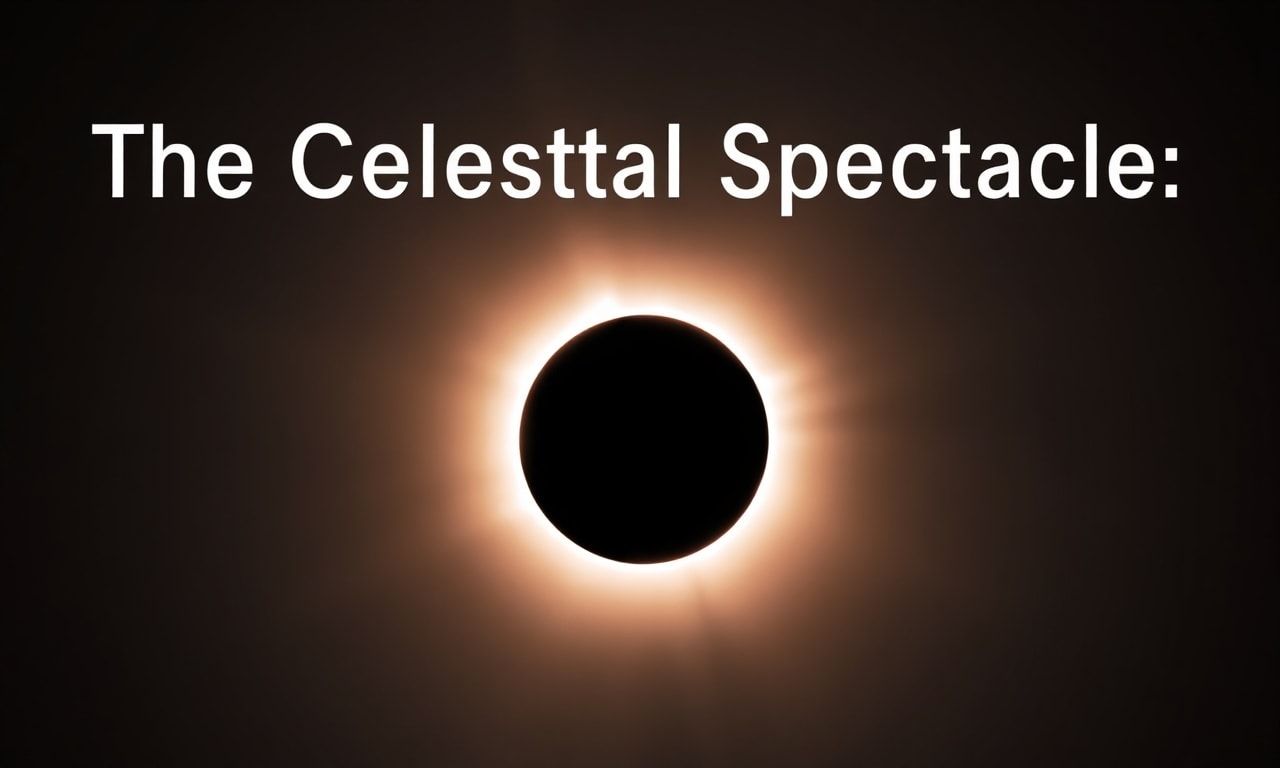
The Celestial Spectacle: Understanding the Solar Eclipse Phenomenon
A solar eclipse is a mesmerizing celestial event that occurs when the Moon passes between the Earth and the Sun, obscuring the Sun either partially or completely. This rare occurrence has captivated human imagination for centuries, inspiring myths, scientific inquiry, and awe. In recent years, solar eclipses have garnered significant attention, drawing millions of enthusiasts and scientists alike to witness the spectacle. Understanding the mechanics and significance of solar eclipses can enhance our appreciation of this natural phenomenon.
The Science Behind Solar Eclipses
Solar eclipses occur due to the precise alignment of the Sun, Moon, and Earth. The Moon’s orbit around the Earth is tilted by about 5 degrees, which means that a perfect alignment for an eclipse is relatively rare. There are three types of solar eclipses: total, partial, and annular. A total solar eclipse occurs when the Moon completely covers the Sun, casting a shadow on the Earth. A partial solar eclipse happens when only a part of the Sun is obscured by the Moon. An annular eclipse takes place when the Moon is too far from the Earth to completely cover the Sun, resulting in a ring of sunlight around the Moon.
The frequency of solar eclipses varies, with at least two and up to five occurring each year. However, total solar eclipses are less common, occurring on average every 18 months. The path of totality, where the Moon’s shadow falls on the Earth, is relatively narrow, making it a rare sight for any given location. The next total solar eclipse visible in North America is expected to occur on April 8, 2024, generating excitement among astronomers and enthusiasts.
Historical and Cultural Significance
Throughout history, solar eclipses have been interpreted in various ways by different cultures. Ancient civilizations often viewed eclipses as omens or signs from the gods. For example, the ancient Chinese believed that a solar eclipse occurred when a celestial dragon devoured the Sun. In Norse mythology, the eclipse was seen as the result of the wolves Sköll and Hati chasing the Sun and the Moon. These interpretations reflect the human tendency to seek meaning in natural phenomena.
In modern times, solar eclipses have become opportunities for scientific discovery. The total solar eclipse of 1919 provided crucial evidence supporting Albert Einstein’s theory of general relativity. During the eclipse, astronomers observed the bending of starlight around the Sun, confirming Einstein’s predictions. This event marked a significant milestone in the history of physics and demonstrated the importance of celestial events in advancing scientific knowledge.
Preparing for a Solar Eclipse
Witnessing a solar eclipse can be an unforgettable experience, but it requires proper preparation. Safety is paramount when viewing a solar eclipse, as looking directly at the Sun can cause permanent eye damage. Special eclipse glasses or solar filters are essential for safe viewing. These devices block out harmful ultraviolet and infrared radiation, allowing viewers to observe the eclipse without risking their vision.
For those interested in capturing the event, photography and videography can be rewarding but challenging. Using a telescope or a telephoto lens can provide detailed images of the eclipse. However, it is crucial to use appropriate solar filters on cameras and telescopes to avoid damaging the equipment. Additionally, practicing with the equipment beforehand can help ensure successful capture of the event.
Beyond safety and photography, planning for a solar eclipse involves choosing the right location. The path of totality offers the best viewing experience, so travelers often plan trips to regions where the eclipse will be fully visible. Websites like sports equipment review comparison can provide useful tips for outdoor enthusiasts who wish to combine their eclipse viewing with other activities.
The Impact on Nature and Wildlife
Solar eclipses have a noticeable impact on the natural world. As the Moon obscures the Sun, the sudden darkness can confuse animals and plants. Birds may return to their nests, nocturnal animals may become active, and flowers may close their petals. These behaviors provide scientists with valuable insights into the biological rhythms of various species. Studying the effects of solar eclipses on wildlife can help researchers understand the intricate relationships between living organisms and their environment.
For example, during the 2017 total solar eclipse in the United States, scientists observed changes in animal behavior across the country. Birds stopped singing, crickets began chirping, and bees returned to their hives. These observations highlighted the sensitivity of wildlife to changes in light and temperature. By studying these responses, researchers can gain a deeper understanding of the ecological impacts of celestial events.
Future Solar Eclipses and Scientific Opportunities
The study of solar eclipses continues to offer new opportunities for scientific discovery. Future eclipses will provide researchers with the chance to investigate the Sun’s corona, the outermost part of the Sun’s atmosphere. The corona is usually hidden by the brightness of the Sun, but during a total solar eclipse, it becomes visible. This rare opportunity allows scientists to study the corona’s structure and dynamics, which can help improve our understanding of solar activity and its effects on Earth.
Additionally, solar eclipses can be used to study the Earth’s atmosphere. The sudden drop in temperature and light during an eclipse can reveal important information about atmospheric conditions. Researchers can use this data to improve weather models and climate predictions. As technology advances, the study of solar eclipses will continue to contribute to our knowledge of the universe and our planet.
In conclusion, solar eclipses are not just spectacular celestial events but also valuable opportunities for scientific research and cultural reflection. Whether you are an avid astronomer or a casual observer, witnessing a solar eclipse can be a profound experience. By understanding the science behind these events and taking the necessary precautions, you can fully appreciate the beauty and significance of this natural phenomenon.
To gain a deeper understanding of the city’s evolution, consider exploring Shanghai’s latest urban transformations in our detailed report.