The Science Behind Solar Eclipses
A solar eclipse occurs when the Moon passes between the Earth and the Sun, obscuring the Sun either partially or completely. This celestial event is a breathtaking display of nature’s grandeur, captivating astronomers and enthusiasts alike. The alignment of these celestial bodies is a precise dance of cosmic proportions, governed by the laws of celestial mechanics. Understanding the science behind solar eclipses not only enhances our appreciation of these events but also provides valuable insights into the workings of our solar system.
Types of Solar Eclipses
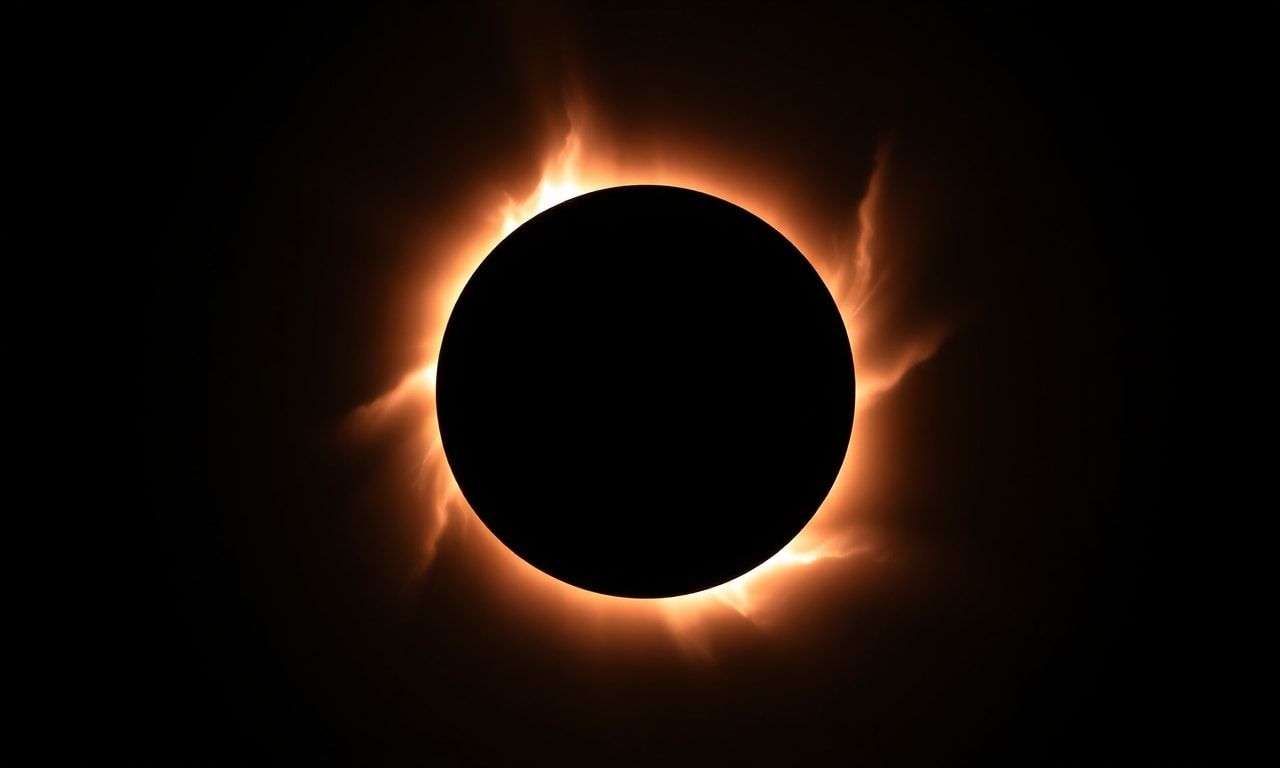
There are three main types of solar eclipses: total, partial, and annular. A total solar eclipse occurs when the Moon completely covers the Sun, casting a shadow on the Earth. This phenomenon is visible only from a narrow path on the Earth’s surface known as the path of totality. In contrast, a partial solar eclipse happens when only a portion of the Sun is obscured by the Moon. An annular solar eclipse takes place when the Moon is too far from the Earth to completely cover the Sun, resulting in a ring-like appearance known as the ‘ring of fire’.
Historical Significance and Cultural Impact
Throughout history, solar eclipses have held significant cultural and historical importance. Ancient civilizations often viewed these events as omens or signs from the gods. For instance, the ancient Chinese believed that solar eclipses occurred when a celestial dragon devoured the Sun. In many cultures, eclipses were associated with impending doom or significant changes. The Babylonian astronomers were among the first to record and predict solar eclipses, using their knowledge to develop early calendars and timekeeping systems. The cultural impact of solar eclipses continues to resonate today, with many communities celebrating these events through festivals and gatherings.
Modern Observations and Research
In the modern era, solar eclipses provide unique opportunities for scientific research. Astronomers use these events to study the Sun’s corona, the outermost part of the Sun’s atmosphere, which is usually obscured by the Sun’s bright light. During a total solar eclipse, the corona becomes visible, allowing scientists to observe its structure and dynamics. Additionally, eclipses offer insights into the Sun’s magnetic field and its influence on space weather. Researchers also use eclipses to study the Earth’s atmosphere and its response to sudden changes in solar radiation. The data collected during these events contribute to our understanding of the Sun-Earth system and its impact on our planet.
Upcoming Solar Eclipses and Viewing Tips
For those eager to witness the spectacle of a solar eclipse, several notable events are on the horizon. One of the most anticipated eclipses is the total solar eclipse on April 8, 2024, which will be visible from parts of North America. Another significant event is the annular solar eclipse on October 14, 2023, which will be visible from parts of the Americas. To safely observe a solar eclipse, it is crucial to use proper eye protection. Special eclipse glasses or solar filters for telescopes and cameras are essential to prevent eye damage. Additionally, viewers should avoid looking directly at the Sun, even during an eclipse, as the intense solar radiation can cause permanent harm.
Community Engagement and Education
Solar eclipses also serve as powerful tools for community engagement and education. Schools, museums, and astronomical societies often organize public viewing events and educational programs to foster interest in astronomy. These events provide an opportunity for people of all ages to learn about the science behind solar eclipses and the broader field of astronomy. For instance, local governments and organizations, such as those in Şişli, often share updates and decisions related to public events and safety measures through platforms like Şişli belediye haberleri kararları güncel. By participating in these events, individuals can deepen their understanding of the universe and appreciate the wonders of the cosmos.
Conclusion
Solar eclipses are awe-inspiring celestial events that have captivated humanity for centuries. From their scientific significance to their cultural impact, these phenomena offer a wealth of knowledge and inspiration. As we look forward to upcoming eclipses, it is essential to prioritize safety and education. By embracing the spirit of curiosity and exploration, we can continue to unravel the mysteries of the universe and celebrate the beauty of the cosmos.
To stay informed about the latest shifts in international affairs, consider reviewing recent global political developments and their potential implications.
To stay informed about the latest happenings in the region, consider exploring Wolfsburg’s current events and updates which offers a comprehensive look at local developments.
In the realm of current events and sports journalism, exploring athletic excellence worldwide offers a compelling look at the dynamic world of athletic achievements.