
How to Look at a Solar Eclipse Safely: A Practical Guide
Learn how to check eclipse glasses, choose safe solar-viewing methods and act during totality, with practical steps to protect your eyes throughout.

Look at the Sun during every partial phase of an eclipse only through certified eclipse glasses or a safe indirect-viewing method, such as a pinhole projector. Ordinary sunglasses, smoked glass and cameras without proper solar filters do not protect your eyes. Remove eclipse glasses only during the brief total phase, and only when the Moon completely covers the Sun.
Before observing, check your glasses for damage and confirm they are made for direct solar viewing. Plan where you will stand, how you will supervise children, and how you will return to indirect viewing as soon as any bright sunlight reappears.
This checklist explains why unfiltered sunlight can injure your eyes, how to inspect viewing equipment, and which methods work for different situations. It also clarifies the narrow conditions under which viewing without eye protection is safe.
- Use certified eclipse glasses for every partial phase; ordinary sunglasses are not safe.
- Inspect viewers for damage and use them as instructed.
- Pinhole projection is a safe way to observe without looking directly at the Sun.
- Remove glasses only during confirmed totality, and put them back on before sunlight returns.
Why Looking Directly at the Sun Is Dangerous
How sunlight harms the retina
Never look directly at the uneclipsed or partly eclipsed Sun without a proper solar filter; concentrated sunlight can injure the retina, the light-sensitive tissue at the back of the eye. Because retinal tissue has no pain receptors, harmful exposure may not cause an immediate warning sensation. Blurred or distorted vision can become apparent only after damage has occurred.
- A partly covered Sun can still harm your eyes.
- Retinal injury may occur without immediate pain.
- Ordinary sunglasses are not eclipse viewers.
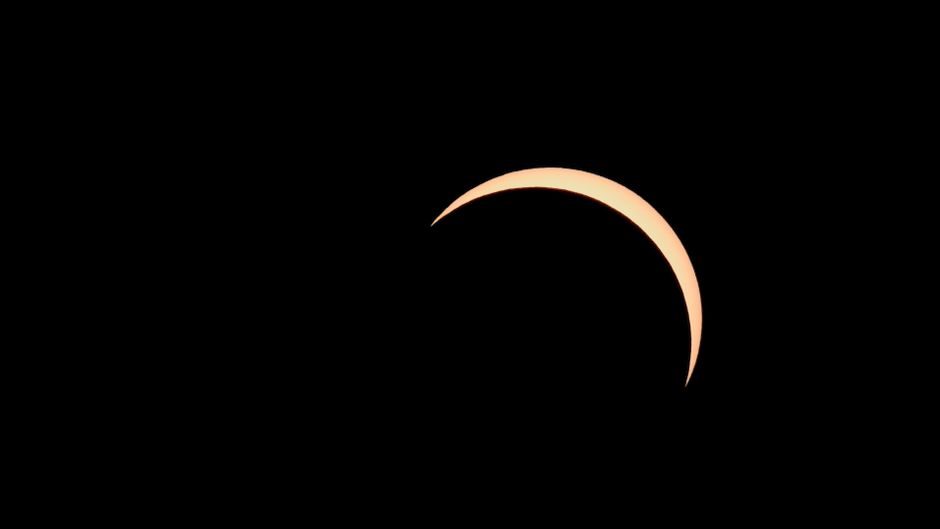
An eclipse does not make the remaining visible sunlight safe to view. Even when most of the solar disk is covered, the uncovered portion remains intensely bright, and ordinary sunglasses cannot reduce it enough. Keep approved eclipse viewers on throughout every partial phase, including when only a thin crescent of Sun remains.
A club preparing a member safety checklist could use a guest posting service to share clear viewing guidance with relevant publications. Keep the central message simple at an observing event: no direct viewing without a certified solar viewer, except during confirmed totality. That rule applies to adults, children and anyone using optical equipment.
Why ordinary filters fail
Regular sunglasses, regardless of how dark their lenses look, are not designed to make direct solar viewing safe. They reduce visible brightness but may not block the intense solar radiation that can damage the retina. Do not stack sunglasses, use exposed film, or improvise a filter from household materials.
Clouds and haze do not make direct viewing safe either. The Sun can remain dangerously bright through thin cloud, and conditions can change while you watch. If clouds pass in front of the solar disk, keep your certified glasses on rather than treating a dimmer view as permission to look without them.
The same caution applies to children, who may look up suddenly or remove their glasses without warning. An adult should explain the rule before the event and supervise viewing closely. If a child cannot keep the glasses in place, use a pinhole projector or another indirect method instead.
How to Check Eclipse Glasses Before You Use Them
Inspect the lenses and frame
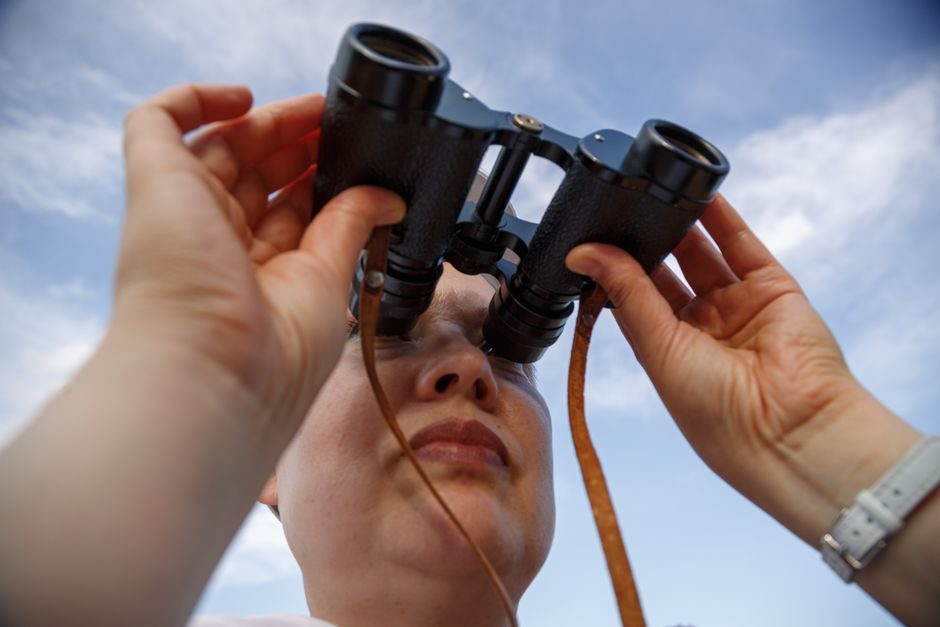
Before putting eclipse glasses on, inspect both lenses and the frame for scratches, punctures, tears, loose filters or other damage. Discard viewers with holes or damaged material; do not patch them with tape or attempt a repair. Educators looking for help communicating this safety advice can consult an seo agency directory.
Check the manufacturer's instructions and any applicable safety markings on the glasses, and use viewers intended for direct solar observation. If the product has no clear identification or its origin is uncertain, choose a known safe indirect method instead. A very dark appearance alone does not prove that a viewer is suitable.
Hold the glasses in place before looking toward the Sun, and make sure they cover your eyes securely without gaps. If you normally wear prescription glasses, follow the viewer's instructions for wearing it over them. Keep the filter in front of your eyes; do not look around its edges.
Use viewers as instructed
Put eclipse glasses on before turning your face toward the Sun, then look only briefly and directly through the intact filters. Turn away before removing the glasses. This simple sequence prevents an unprotected glance during the transition between observing and adjusting your equipment or position.
Follow the product's own guidance on handling and reuse rather than assuming every viewer has identical limits. Store glasses where the lenses will not be scratched, bent or crushed between observations. If you notice damage later, stop using them and switch to indirect viewing.
If the glasses slide, fit poorly or are difficult to keep on, do not compensate by holding them at an angle. Adjust the fit only as the instructions allow, or choose a projection method. Anyone who experiences vision changes after solar exposure should seek prompt advice from an eye-care professional.
Safe Ways to Observe the Sun
Choose a viewing method
For a simple, hands-free option, wear intact eclipse glasses made for direct solar viewing and follow their instructions. A pinhole projector offers an indirect alternative: sunlight passes through a small opening and forms an image on a surface behind it. Groups organizing public sessions may use press release distribution uk to share local event details and safety guidance.
A purpose-built solar viewer or a telescope with a correctly fitted solar filter can show more detail, but equipment must be designed for solar observation. A telescope or binoculars magnify sunlight and can cause severe eye injury if used without the right filter. Put filters at the objective end, as the equipment maker directs.
Choose based on who is observing and how much supervision is available. Glasses allow brief direct views, while projection lets a group watch an image without looking at the Sun. For children or a busy gathering, projection can make it easier for an adult to monitor the activity and keep everyone looking at the projected image.
| Method | How to view | Key caution |
|---|---|---|
| Eclipse glasses | Look through intact solar filters | Use during partial phases |
| Pinhole projector | Watch the image on a surface | Never look through the hole |
| Tree-leaf projection | Observe images on the ground | Look at the ground, not the Sun |
| Filtered telescope | View through a solar-filtered instrument | Use a proper front-mounted filter |
Set up indirect projection
Make a basic pinhole projector by putting a small, clean hole in one piece of card and holding a second light-colored surface behind it. With your back to the Sun, let sunlight pass through the hole and fall on the surface. Watch the projected image there, never through the pinhole.
Keep the opening small and the projection surface far enough behind it to produce a clear image. Moving the two surfaces closer or farther apart changes the image size and sharpness. Do not look through the opening, even if it seems too small to show much detail.
A tree canopy can also project many small crescent-shaped images onto the ground during a partial eclipse. Stand in a safe, open spot and observe the patterns beneath the leaves rather than looking up through gaps. Projection methods show the changing shape of the Sun without requiring direct viewing.
Remove eclipse glasses only when the Moon has completely covered the bright solar surface and totality has begun at your location.
What to Do During the Brief Total Phase
Confirm totality before removing glasses
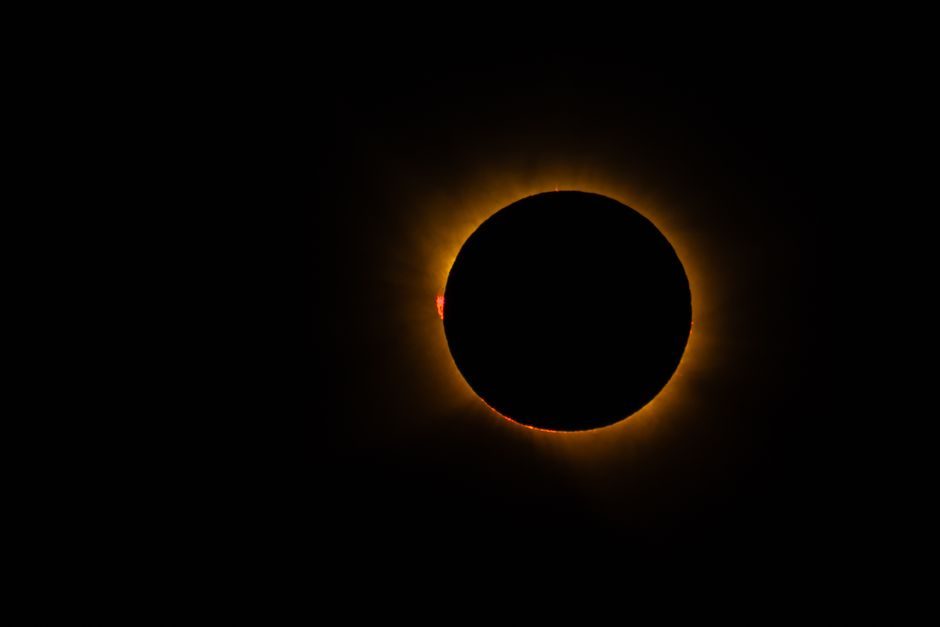
Remove eclipse glasses only when the Moon has completely covered the bright solar surface and totality has begun at your location. If any bright part of the Sun remains visible, keep your viewer on. Totality is brief, and its timing varies by location, so use reliable local timing guidance and watch the eclipse itself.
A partial eclipse never offers a glasses-free interval, even when the Sun appears as a narrow crescent. Do not rely on darkness, a sudden change in the surroundings, or another observer's reaction as proof that totality has started. The decisive sign is that the bright solar disk is fully covered.
Before the event, decide how you will know when to put your glasses back on. Prepare to replace them as soon as the first bright sunlight returns, before looking toward the Sun again. If you are uncertain whether totality has begun or ended, keep your glasses on and observe indirectly.
Return to filtered viewing promptly
As totality ends, the returning sunlight can become harmful immediately. Put your eclipse glasses back on before turning toward the Sun, and keep them on for the remaining partial phase. Do not wait for the crescent to look bright or large; any exposed solar surface requires protection.
If you are using a camera, telescope or binoculars, follow the equipment maker's instructions for solar filters and stop observing through it before sunlight returns. Never remove or adjust a solar filter while the equipment points at the Sun. Magnified sunlight can damage eyes rapidly if it enters an unprotected optical instrument.
Stay with the same safe routine through the final partial phase: use certified glasses for direct views or switch to projection. If you lose track of the eclipse stage, stop looking at the Sun until you can confirm conditions. A cautious pause is safer than guessing at the boundary of totality.
Common Eclipse-Viewing Mistakes to Avoid
Avoiding Improvised Filters
Do not use sunglasses, smoked glass, exposed film, CDs, or unverified filters to look at the Sun. These materials may make the scene seem dimmer without blocking the harmful radiation that can injure the retina. Use only purpose-made solar viewers that meet the relevant safety standard, or choose an indirect projection method.
- ☐ Set aside sunglasses and improvised filters.
- ☐ Inspect solar viewers for damage before use.
- ☐ Fit an approved filter over the front of each optical instrument.
- ☐ Choose a safe indirect method if equipment is uncertain.
A camera, binoculars, or telescope needs a properly fitted solar filter over its front opening before it is pointed at the Sun. Eclipse glasses worn over your eyes do not protect you when looking through optical equipment, because concentrated sunlight can damage the glasses and your eyes. If the correct filter is missing, do not use the instrument.
Keep a short checklist beside your viewing supplies so no one improvises when the eclipse begins. Before observing, confirm the approved viewer is intact, check that optical equipment has its correct front-mounted filter, and agree that anyone uncertain will look away. A cautious pause is safer than testing an unfamiliar material on the Sun.
- Reject homemade or damaged filters.
- Never view through optics without a front-mounted solar filter.
- Use indirect projection if suitable eye protection is unavailable.
- Stop if you are unsure about any equipment.
Responding to Unsafe Moments
If someone looks toward the Sun without protection, tell them calmly to turn away and put on a proper solar viewer before looking again. Do not assume a brief glance was harmless or use the absence of immediate pain as reassurance. Retinal injury may not cause an instant warning, so prevention matters throughout the event.
Do not remove solar viewers during a partial eclipse, even when the Sun appears mostly covered. A remaining bright crescent is still intense enough to harm unprotected eyes. Only observers within the path of totality may view the completely eclipsed Sun without filters, and only during the brief period when the Sun is fully covered.
If a viewer slips, cracks, or becomes difficult to see through, stop observing and replace it rather than adjusting it while facing the Sun. Turn away first, then check the equipment in shade. Anyone who develops blurred vision, a blind spot, or unusual distortion after viewing should seek prompt advice from an eye-care professional.
How to Help a Group Observe Safely
Set Clear Group Roles
Assign one person to explain the viewing rules and another to check that equipment is ready before the group looks toward the Sun. For children, keep an adult close enough to supervise how viewers are used and removed. Make the rule simple: look at the Sun only through a safe method, and turn away before changing equipment.
Astronomy clubs preparing a written safety guide for members may use buy guest posts online to share practical observing advice with a wider audience. Keep the guidance focused on actions people can verify, such as inspecting viewers and checking local circumstances. Clear instructions should distinguish a partial eclipse from the fully covered Sun during totality.
Before the event, demonstrate how to put on and remove eclipse glasses while facing away from the Sun. Ask participants to practise the sequence using an ordinary bright object, not by looking toward the solar disk. If the group includes people with limited mobility or vision, arrange a suitable indirect viewing option and an accessible place to observe.
- Name a safety lead and an equipment checker.
- Show everyone how to use viewers while facing away from the Sun.
- Keep children within an adult's supervision.
- Prepare an accessible indirect viewing option.
Keep Instructions Practical
Give a short safety briefing before the eclipse rather than trying to explain every detail while people are watching. State which viewing methods the group will use, where spare viewers are kept, and who can answer questions. Repeat the rule that protection stays on throughout every partial phase, including before and after totality.
Use signs or spoken reminders at entrances to the viewing area, especially if people may arrive after the briefing. Put instructions where viewers collect equipment and where optical devices are set up. A reminder should say what to do, not merely warn people to be careful; for example, tell them to turn away before removing a viewer.
Plan for interruptions such as changing weather, a crowded observing spot, or a viewer that does not fit comfortably. Pause the activity if participants cannot follow the agreed method or if equipment is being shared in a rushed way. Resume only after a leader has restored safe conditions and made the instructions clear again.
Planning and Sharing Reliable Safety Guidance
Check Trusted Guidance Early
Use current guidance from a recognized astronomy or eye-safety authority when preparing instructions for an eclipse event. Confirm that any viewing equipment meets the applicable solar-viewer standard, and distinguish certified viewers from ordinary sunglasses. Educators and skywatching groups looking for publishing or outreach options can learn more through MediaKit.uk.
- Mistake: treating sunglasses as solar viewers; use purpose-made solar protection instead.
- Mistake: assuming every location experiences totality; check a map for the exact observing site.
- Mistake: sharing unverified safety advice; confirm it with a recognized astronomy or eye-safety authority.
Check the circumstances for your observing location using a reliable eclipse map or local astronomy organization. The map tells you whether the Sun will be partially covered or whether totality is visible there, which changes when direct viewing without a filter is allowed. Do not use a general forecast or a map for another town as a substitute.
Keep the wording consistent across handouts, event pages, and spoken briefings so participants do not receive conflicting directions. Include the safe viewing method, the limits of any optical equipment, and the rule for totality in plain language. Review materials before sharing them, and remove any advice that recommends improvised filters or unverified products.
- Use recognized safety guidance and check its current version.
- Verify local eclipse circumstances on a reliable map.
- Keep handouts and spoken instructions consistent.
- Remove advice that endorses improvised filters.
Make Shared Advice Usable
Write instructions so a first-time observer can act on them without needing specialist vocabulary. Explain where a solar filter belongs on a telescope or binoculars, and say that it must cover the front opening. If a reader cannot tell what to do from one clear sentence, revise the wording before distributing it.
Give each version of a guide a visible date or revision note so event organizers can identify outdated material. When safety advice changes, update the handout and event page together rather than relying on a message that only some participants may see. Keep an accessible digital copy available for people who cannot use printed materials.
Invite a second knowledgeable person to check the guide for errors, especially around the timing of totality and the use of optical equipment. Ask them to test the steps as a reader would, not merely proofread the wording. Correct any ambiguity before the material reaches a group, and direct questions to qualified local astronomy or eye-care sources.
Simple Steps for a Safer Viewing Day
Prepare Before the Event
Gather your viewing equipment ahead of time and decide how you will observe before arriving at the site. If organizations publish eclipse guidance for partner groups, white label link building may help them distribute consistent resources under their own brand. Keep shared safety materials aligned with the equipment and local eclipse circumstances people will actually encounter.
- Check the eclipse circumstances for your exact location.
- Inspect solar viewers and optical filters.
- Choose a clear, stable observing place and an alternative plan.
- Brief everyone on protection and supervision before observing.
Check your solar viewers for scratches, punctures, loose parts, or other damage, and replace questionable items rather than trying to repair them. Confirm that any telescope or binoculars have a suitable solar filter securely fitted over the front opening. Pack a separate indirect-viewing option so the group can still follow the event if direct viewing is not practical.
Find a stable observing place where people can look up without walking into traffic or crowding around equipment. Check the local eclipse timing and the expected weather, then plan an alternative if clouds block the Sun. Tell participants where to meet, who is supervising, and how they can get instructions if they arrive after the group briefing.
- Choose your viewing method and check local eclipse circumstances.
- Inspect viewers and filters before leaving.
- Pack a safe indirect-viewing option.
- Agree on a meeting place and safety lead.
Follow a Calm Routine
At the observing site, start with the safety briefing before anyone points equipment at the Sun. Put on solar viewers while facing away, then look toward the Sun only after the glasses are in place. When you need to remove them, turn away first; this simple sequence reduces the chance of an unprotected glance.
Keep a steady pace rather than letting excitement rush people into changing equipment or moving around while looking upward. Have the safety lead pause the group if viewers are being passed around carelessly or a filter has shifted. Participants should lower their gaze and follow the leader's instructions before the activity continues.
After the eclipse, put viewers away safely and check that children have returned any borrowed equipment. Ask the group whether anyone noticed damaged gear or confusion about the instructions, then address those issues before the next observing event. Anyone with unusual vision symptoms after solar exposure should promptly contact an eye-care professional for guidance.
Frequently asked questions
Can I look at a partial solar eclipse through sunglasses?No. Ordinary sunglasses do not provide the protection needed for direct solar viewing, regardless of how dark their lenses appear. Use purpose-made solar viewers that meet the applicable safety standard, or observe indirectly with a safe projection method. If you are unsure whether a viewer is suitable or intact, do not use it to look at the Sun.
Are eclipse glasses safe to use with binoculars or a telescope?No. Eclipse glasses are not a substitute for a solar filter fitted over the front opening of binoculars, a telescope, or a camera lens. Optical equipment concentrates sunlight, which can quickly damage an eye or a viewer placed behind the optics. Use only equipment designed for solar observation with its correct, securely fitted front-mounted filter.
When can I remove my eclipse glasses during an eclipse?Only observers within the path of totality may view the Sun without a filter during the brief interval when the Moon completely covers its bright face. Keep your glasses on during every partial phase, including as totality begins and ends. If you are outside the path, the eclipse remains partial and direct viewing always requires proper protection.
What should I do if my eyes feel normal after an unprotected glance?Feeling normal does not prove that your eyes were unharmed, because retinal damage may not cause immediate pain or a clear warning. Do not look at the Sun again without proper protection. If you notice blurred vision, a blind spot, distortion, or another unusual symptom, contact an eye-care professional promptly for advice.
Make Safety Part of the Plan
Safe eclipse viewing depends on using the right method for the phase and location, not on how brief a glance seems. Check viewers before the event, keep solar filters correctly fitted to optical equipment, and never rely on sunglasses or improvised materials. For a group, make the rules easy to follow, assign someone to supervise, and pause whenever equipment or instructions are uncertain.
Your next step is to confirm whether your observing site lies within the path of totality, then choose and inspect the appropriate viewing equipment. Share the local timing and a short safety briefing with everyone who will join you. With those preparations in place, you can focus on the changing sky while keeping eyes protected from first contact to the end.

Add Solar Eclipse as a preferred source on Google


