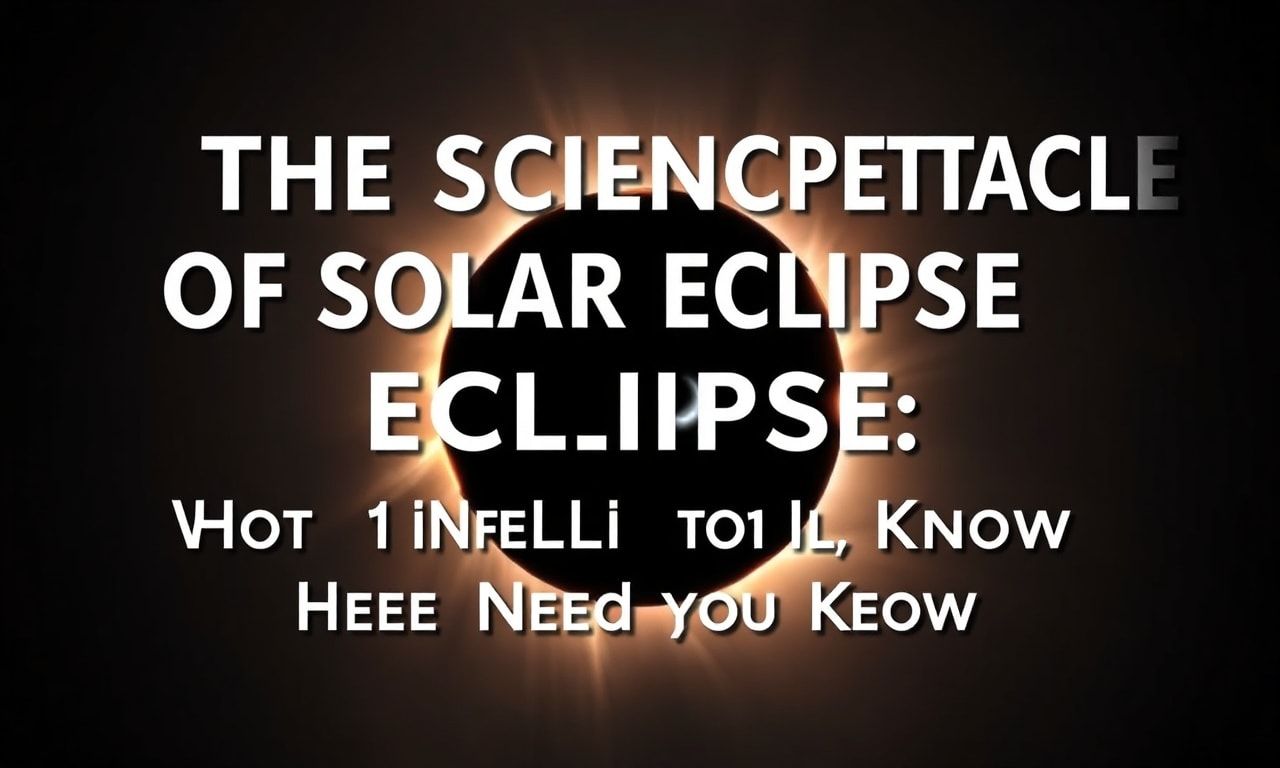
The Celestial Dance: Understanding Solar Eclipses
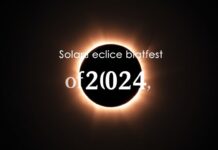
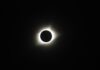
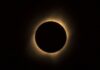
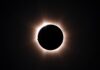
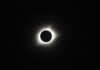
A solar eclipse is a breathtaking celestial event that occurs when the Moon passes between the Earth and the Sun, casting a shadow on the Earth’s surface. This alignment is a rare and spectacular phenomenon that has captivated human imagination for centuries. There are three types of solar eclipses: total, partial, and annular. During a total solar eclipse, the Moon completely covers the Sun, revealing the Sun’s corona. In a partial eclipse, only a part of the Sun is obscured, while an annular eclipse occurs when the Moon is too far from the Earth to completely cover the Sun, resulting in a ‘ring of fire’ effect.
The Science Behind the Shadow
The mechanics of a solar eclipse are a testament to the precision of celestial mechanics. The Moon’s orbit around the Earth is inclined by about 5 degrees to the Earth’s orbit around the Sun. This means that a solar eclipse does not occur every month but only when the Moon crosses the ecliptic plane at a node. The shadow cast by the Moon has two parts: the umbra, where a total eclipse is visible, and the penumbra, where a partial eclipse is seen. The width of the umbra on the Earth’s surface is usually around 100-200 kilometers, making the path of totality relatively narrow.
Historical Significance and Cultural Impact
Throughout history, solar eclipses have been interpreted in various ways by different cultures. Ancient civilizations often viewed eclipses as omens or signs from the gods. The ancient Chinese believed that a solar eclipse was caused by a celestial dragon devouring the Sun. In Viking mythology, the gods were thought to be chasing and catching the Sun. These interpretations reflect the awe and mystery that solar eclipses have inspired. In modern times, solar eclipses have become opportunities for scientific discovery and public engagement with astronomy.
Modern Scientific Research
Solar eclipses provide unique opportunities for scientific research. During a total solar eclipse, the Sun’s corona becomes visible, allowing scientists to study its structure and dynamics. The corona is the outermost part of the Sun’s atmosphere and is usually hidden by the bright light of the Sun’s surface. Eclipses also offer a chance to study the Sun’s magnetic field and solar wind. In addition, the temporary darkness during an eclipse can be used to observe and study stars and planets that are normally not visible during the day. The data collected during eclipses has contributed significantly to our understanding of the Sun and its impact on the Earth.
Preparing for the Next Solar Eclipse
For those planning to witness a solar eclipse, preparation is key. Safety is paramount when viewing a solar eclipse. Directly looking at the Sun, even during an eclipse, can cause permanent eye damage. Special eclipse glasses that meet the ISO 12312-2 international safety standard should be used. Alternatively, a pinhole projector can be used to safely view the eclipse indirectly. It’s also important to plan ahead for travel and accommodation, as popular viewing locations can become crowded. For accurate information on upcoming eclipses and their paths, reliable sources such as NASA’s eclipse website are invaluable.
Enerji Üretim Tahmini and Solar Energy
Solar eclipses also have implications for solar energy production. During an eclipse, the sudden reduction in sunlight can cause a significant drop in solar power output. This can be a challenge for grid operators who need to maintain a stable supply of electricity. To mitigate this, energy companies use advanced forecasting tools and techniques to predict the impact of an eclipse on solar energy production. For instance, enerji üretim tahmini (energy production forecasting) plays a crucial role in ensuring that backup power sources are ready to compensate for the loss of solar energy during an eclipse. This highlights the importance of integrating diverse energy sources to maintain grid stability.
Conclusion: A Moment of Cosmic Wonder
Solar eclipses are not just astronomical events; they are moments of cosmic wonder that bring people together. Whether for scientific research, cultural significance, or personal awe, eclipses remind us of our place in the universe. As we continue to study and understand these phenomena, we deepen our appreciation for the intricate dance of celestial bodies. The next time a solar eclipse graces the skies, take a moment to witness this spectacular display of nature’s grandeur.