The Anticipation Builds
The astronomical community and enthusiasts alike are abuzz with excitement as the world prepares for the Great American Eclipse of 2024. This celestial event, set to occur on April 8, 2024, promises to be a spectacle of nature’s grandeur, captivating millions across the United States. The eclipse will traverse a path from the southwestern tip of Texas to the northeastern corner of Maine, offering a unique opportunity for both scientists and casual observers to witness the awe-inspiring phenomenon of a total solar eclipse.
Understanding the Eclipse
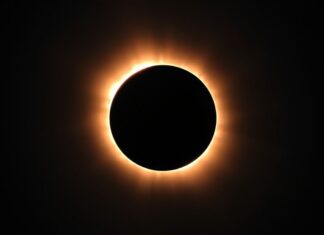
A solar eclipse occurs when the Moon passes between the Earth and the Sun, casting a shadow on the Earth’s surface. In the case of a total solar eclipse, the Moon completely covers the Sun, revealing the Sun’s corona—a halo of plasma that surrounds the Sun and is usually invisible to the naked eye. The 2024 eclipse will be particularly special due to its long duration of totality, which can last up to 4 minutes and 28 seconds in some locations, providing ample time for observation and study.
Path of Totality
The path of totality, where the Moon’s shadow will completely cover the Sun, will stretch across 13 states. Major cities within this path include Dallas, Texas; Indianapolis, Indiana; Cleveland, Ohio; Buffalo, New York; and Burlington, Vermont. Residents and visitors in these areas are expected to experience the full effect of the eclipse, with daylight turning into twilight for a brief period. For those outside the path of totality, a partial eclipse will still be visible, though the experience will be less dramatic.
Preparations and Safety
As the eclipse approaches, communities along the path of totality are gearing up for the influx of visitors. Local governments, tourism boards, and educational institutions are collaborating to ensure a safe and enjoyable experience for all. One of the key aspects of preparation is educating the public about the importance of eye safety. Viewing a solar eclipse directly without proper protection can cause permanent eye damage. Organizations like NASA and the American Astronomical Society are providing guidelines on how to safely observe the eclipse, including the use of certified solar filters and indirect viewing methods.
In addition to safety measures, outreach campaign services are being utilized to spread awareness and excitement about the event. These campaigns aim to engage the public, especially younger generations, in the wonders of astronomy and the science behind eclipses. By leveraging outreach campaign services, communities can foster a deeper appreciation for celestial events and inspire future scientists and astronomers.
Scientific Significance
The Great American Eclipse of 2024 is not just a spectacle for the public; it is also a golden opportunity for scientists to conduct research. The eclipse provides a unique chance to study the Sun’s corona, solar flares, and other phenomena that are typically difficult to observe. Researchers will be setting up stations along the path of totality to gather data using specialized equipment. This data can help advance our understanding of the Sun’s behavior and its impact on Earth’s climate and space weather.
Cultural and Historical Context
Solar eclipses have fascinated humanity for centuries, often being interpreted as omens or significant events in various cultures. Ancient civilizations, such as the Babylonians and the Chinese, recorded eclipses and developed sophisticated methods to predict them. In modern times, eclipses have become a source of scientific inquiry and public fascination. The 2024 eclipse is expected to draw comparisons to the Great American Eclipse of 2017, which captivated millions and sparked a renewed interest in astronomy.
Economic Impact
The economic impact of the 2024 eclipse is also significant. Communities along the path of totality are preparing for a surge in tourism, with hotels, restaurants, and local businesses expecting a boost in revenue. Some areas are planning special events, festivals, and viewing parties to capitalize on the influx of visitors. However, this also poses challenges in terms of infrastructure and resource management, as local authorities work to ensure that the increased demand does not overwhelm public services.
Looking Ahead
As the countdown to the Great American Eclipse of 2024 continues, the anticipation and excitement grow. This celestial event serves as a reminder of the beauty and mystery of the universe, bringing people together in a shared experience of wonder and discovery. Whether you are a seasoned astronomer or a curious observer, the 2024 eclipse promises to be a memorable event that will leave a lasting impression on all who witness it.
For those planning to observe the eclipse, it is essential to prepare in advance. Obtain certified solar viewing glasses, plan your travel and accommodation, and familiarize yourself with the local events and viewing locations. By doing so, you can ensure a safe and enjoyable experience that will be remembered for years to come.
To stay informed about the latest developments in the field, consider exploring digital journalism’s future trends and how they are shaping the news industry.
As the media industry continues to transform, understanding how publishers are navigating these changes is crucial; explore the current trends in digital media adaptation strategies.
As digital content consumption continues to evolve, understanding the legalities of downloading online videos has become increasingly important; our guide, downloading YouTube videos responsibly, offers essential insights for media consumers.