The Celestial Spectacle: Understanding the Solar Eclipse Phenomenon
A solar eclipse is one of the most awe-inspiring events in the natural world, captivating the imagination of people across cultures and generations. This celestial phenomenon occurs when the moon passes between the Earth and the Sun, casting a shadow on the Earth’s surface. The result is a temporary darkening of the sky, often accompanied by a dramatic drop in temperature. Solar eclipses are not just spectacular to witness; they also provide valuable opportunities for scientific research and discovery.
The Science Behind Solar Eclipses
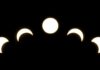
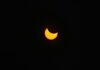
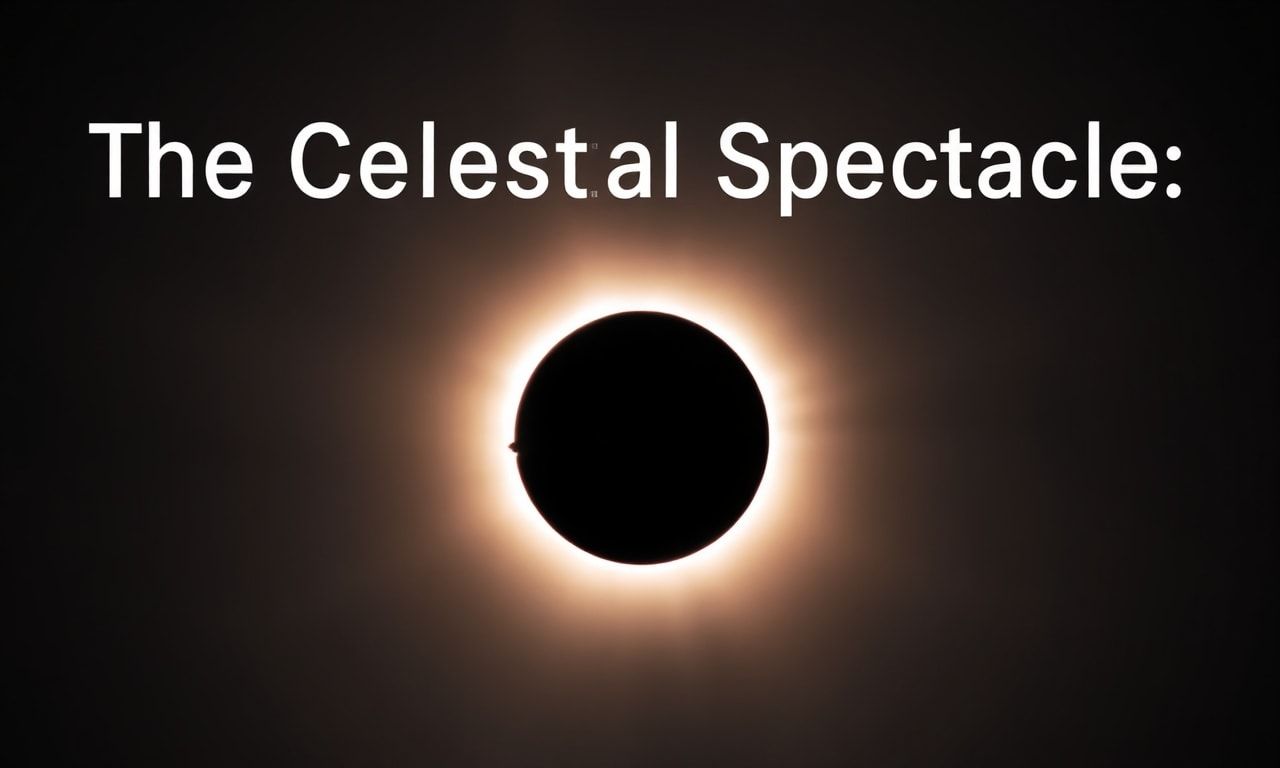
Solar eclipses occur due to the precise alignment of the Sun, Moon, and Earth. There are three types of solar eclipses: total, partial, and annular. A total solar eclipse happens when the Moon completely covers the Sun, revealing the Sun’s corona. This is the most dramatic type of eclipse and can only be seen from a narrow path on Earth’s surface. A partial solar eclipse occurs when only a part of the Sun is obscured by the Moon, while an annular eclipse happens when the Moon is too far from Earth to completely cover the Sun, resulting in a ring of sunlight around the Moon.
The frequency of solar eclipses is a subject of great interest. On average, a solar eclipse occurs about every 18 months, but the exact frequency can vary. This is because the Moon’s orbit around the Earth is tilted relative to the Earth’s orbit around the Sun, causing eclipses to occur only when the Moon’s orbit intersects with the Earth’s orbital plane. This intersection is known as the line of nodes, and eclipses can only happen when the Sun is near this line.
Historical Significance and Cultural Impact
Throughout history, solar eclipses have had a profound impact on human civilization. Ancient cultures often interpreted eclipses as omens or signs from the gods. For example, in ancient China, eclipses were seen as a sign of the dragon swallowing the Sun. In many cultures, eclipses were associated with fear and superstition, leading to various rituals and practices aimed at warding off evil spirits. The ancient Greeks, on the other hand, used the principles of geometry to predict eclipses, demonstrating an early understanding of the celestial mechanics involved.
In modern times, solar eclipses continue to captivate the public imagination. They are often seen as opportunities for scientific discovery and public engagement. The 2017 solar eclipse in the United States, for instance, drew millions of viewers and provided a unique opportunity for scientists to study the Sun’s corona and other phenomena. The event also sparked a renewed interest in astronomy and space science, inspiring a new generation of scientists and enthusiasts.
Scientific Research and Discoveries
Solar eclipses provide a rare opportunity for scientists to study the Sun’s corona, the outermost part of the Sun’s atmosphere. The corona is normally invisible to the naked eye due to the bright light of the Sun, but during a total solar eclipse, it becomes visible, allowing scientists to observe its structure and dynamics. This has led to significant advancements in our understanding of the Sun’s magnetic field, solar wind, and other phenomena.
In addition to studying the Sun, solar eclipses also provide opportunities for research in other fields. For example, the temporary darkening of the sky during an eclipse can be used to study the behavior of animals and plants. Scientists have observed that some animals become confused during an eclipse, mistaking it for nighttime. This behavior can provide insights into the biological clocks and navigational systems of various species.
Solar eclipses also play a crucial role in testing theories of general relativity. During the 1919 solar eclipse, Sir Arthur Eddington’s observations of the bending of starlight around the Sun provided experimental confirmation of Albert Einstein’s theory of general relativity. This groundbreaking discovery revolutionized our understanding of gravity and the nature of space and time.
Safety and Viewing Tips
While solar eclipses are a breathtaking natural phenomenon, it is essential to view them safely. Looking directly at the Sun, even during an eclipse, can cause permanent damage to your eyes. To safely observe a solar eclipse, use special solar filters or eclipse glasses that meet international safety standards. These filters block out the harmful ultraviolet and infrared radiation, allowing you to view the eclipse without damaging your eyes.
Another safe method for viewing a solar eclipse is by using a pinhole projector. This simple device projects an image of the Sun onto a screen, allowing you to observe the eclipse indirectly. You can make a pinhole projector using a cardboard box, a piece of aluminum foil, and a white sheet of paper. This method is particularly useful for groups and educational settings, as it allows multiple people to view the eclipse simultaneously.
For those interested in capturing the eclipse on camera, it is important to use a solar filter on your lens. Never look through the viewfinder of an unfiltered camera while pointing it at the Sun, as this can also cause eye damage. Instead, use the camera’s live view feature or a digital display to compose your shots safely.
Upcoming Solar Eclipses
Solar eclipses are relatively frequent, with several occurring each decade. The next total solar eclipse visible from North America will take place on April 8, 2024. This eclipse will be visible from parts of Mexico, the United States, and Canada, providing millions of people with the opportunity to witness this celestial spectacle. Other notable upcoming eclipses include an annular solar eclipse on October 14, 2023, visible from parts of North, Central, and South America.
For those planning to travel to witness a solar eclipse, it is essential to plan ahead. Popular viewing locations can become crowded, and accommodations may be limited. Additionally, weather conditions can significantly impact visibility, so it is important to choose a location with a high probability of clear skies. Websites like Türkiye’de son dakika kriminal haberler can provide up-to-date information on travel and weather conditions, helping you make informed decisions about your eclipse viewing plans.
In conclusion, solar eclipses are a remarkable natural phenomenon that has captivated human imagination for centuries. From ancient myths and superstitions to modern scientific discoveries, eclipses continue to inspire and educate us about the wonders of the universe. By understanding the science behind solar eclipses and taking the necessary precautions to view them safely, we can fully appreciate the beauty and significance of this celestial event.
Stay informed about the latest in scientific research with our article on groundbreaking discoveries and advancements.
As cities worldwide compete in the tech race, Shanghai’s advancements stand out in the latest developments shaping global innovation.
To better understand the intricacies of worldwide reporting, consider exploring decoding international news coverage and its impact on global perspectives.